
.png)
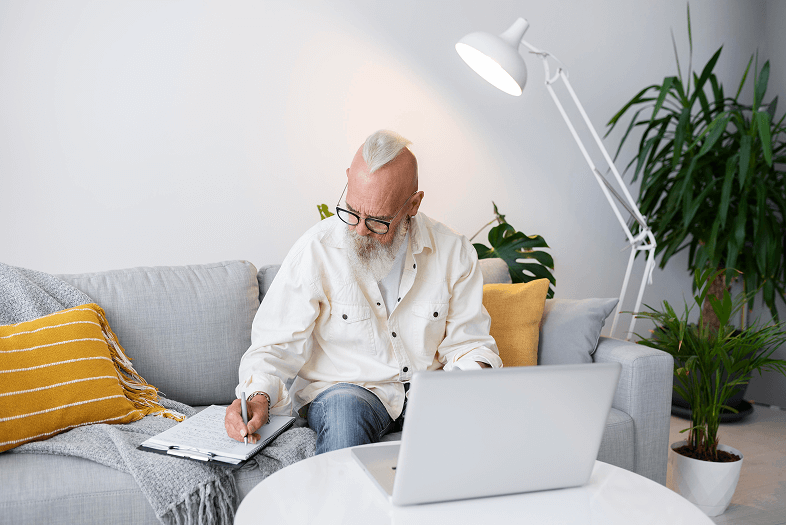
At-home sleep studies, also known as home sleep apnea tests (HSAT or HST), are becoming more and more popular for people who think they may be suffering from obstructive sleep apnea (OSA). Home tests may not have all of the bells and whistles of an in-lab sleep study, but the convenience and affordability that home-based tests offer can’t be beat in a clinical setting.
Instead of spending a night in a hospital or clinic, patients can monitor their breathing and oxygen levels in the comfort of their own bed. So, how do at-home sleep studies actually work, and are they the right choice for you?
What is a home sleep study?
At-home sleep apnea tests are conducted with portable equipment that allows you to monitor your vitals in your normal sleep environment. In the past, an overnight stay in a clinic for a full polysomnography (PSG) was beyond reproach when it came to diagnosing sleep apnea, but today, the diagnostic process is becoming more and more accessible to people seeking to get their sleep back on track.
Home tests measure important data such as your breathing, heart rate, and oxygen levels while you sleep. Patients are given a portable kit with instructions, or in some cases, a clinician can assist with setup in the home. Patients apply sensors around the body, then maintain their normal bedtime routine. Afterwards, a doctor will review the data and come to a conclusion based on the results.
They are useful in monitoring the key factors used to diagnose sleep apnea, but it’s important to understand their limitations as well. Unlike PSGs, home tests cannot monitor brain activity, muscle movement, or sleep cycles. As sleep expert Dr. Guy Leschziner explains, “What a lot of the home devices don't do is measure the direct impact of the respiratory events on your brain waves and on the sleep architecture itself. So, in very young, very fit individuals, occasionally, these devices can produce false negatives, and if you have slept relatively little, it can cause an underestimate of how bad your sleep apnea is.”
How accurate are at-home sleep apnea tests?
While home studies may not be quite as thorough as other options, they are still very dependable when it comes to detecting OSA. “At-home tests are used routinely by clinical services because they are generally very accurate.” So, while home testing is reliable for most patients, there are limitations to be aware of:
- Newer HSAT devices can differentiate between being asleep and awake, leading to more accurate data.
- Central sleep apnea (CSA) can go undetected because the test does not monitor brain activity.
- Incorrect sensor placement or user error can result in false negatives.
Is an at-home study right for you?
There’s no one-size-fits-all solution when it comes to diagnosing sleep apnea, but there are a few key factors to consider when choosing which testing method is right for you. For many people, HSAT can be a convenient, affordable, and reliable alternative to traditional polysomnography, but other patients may benefit from a more thorough test.
If you’re suffering from clear signs of OSA, such as loud snoring, choking, gasping, or witnessed apneas during the night, HSAT may be a good first step in receiving your diagnosis. However, if you have certain comorbidities like obesity, cardiovascular issues, or if you suspect another sleep disorder like narcolepsy, you may require a more in-depth solution that can monitor factors such as brain activity, muscle movement, sleep cycles, fatigue, and more.
Wondering if sleep apnea is affecting you? Buy our At-Home Sleep Study. It is a simple, one night test designed to measure key signals related to obstructive sleep apnea, or OSA
Frequently Asked Questions
Can an at-home sleep study replace a doctor’s visit?
No. While the device records data, only a qualified healthcare provider can interpret the results and decide on treatment. HSATs are designed to supplement—not replace—medical evaluation.
Do I need special training to use the equipment?
Most HSAT devices are designed for simplicity, with step-by-step instructions or even video tutorials. Patients usually receive guidance from their sleep clinic beforehand, making setup manageable for most people.
How soon will I get results from a home sleep test?
Turnaround times vary. Some devices upload data directly to the cloud for immediate review, while others require you to return the kit to the clinic. On average, results are reviewed within a week.
Will my insurance cover an at-home sleep study?
Coverage depends on your plan. Most U.S. insurers, including Medicare, cover HSAT if your doctor orders it for suspected sleep apnea, but preauthorization may be required.
Are home sleep studies safe?
Yes. HSATs are non-invasive and use external sensors only. There are no electrical currents or medications involved, and side effects are virtually nonexistent.
Wondering if sleep apnea is affecting you? Buy our At-Home Sleep Study. It is a simple, one night test designed to measure key signals related to obstructive sleep apnea, or OSA

How to use the Text to HTML converter?
- Paste a visual document to the left to convert it to HTML
- Paste your HTML code it the right to preview the document
Press the Clean button to execute the checked HTML cleaning options.
Erase the page to get started.

.png)