


Your CPAP machine only works if the mask works. A poor fit leads to leaks, dry mouth, and restless nights. For many, it’s the reason CPAP feels impossible. The mask, not the machine, is what determines whether therapy feels tolerable or frustrating.
That’s why choosing the right type matters. CPAP masks generally fall into four categories: nasal pillows, nasal masks, full-face masks, and hybrids. Each has its own strengths and drawbacks depending on how you breathe, your sleep position, and your pressure needs. Here’s how they compare, and how to tell which one may fit you best.
Quick answer: Which CPAP mask is best for you?
- Nasal pillows
Best for side sleepers, glasses wearers, minimalists, or people with facial hair. Lightest feel with minimal contact.
- Nasal mask
Best for most users, including those with moderate to high pressures. A reliable middle-ground option that balances comfort and stability.
- Full-face mask
Best for mouth breathers, people with frequent nasal congestion, or those needing high pressure therapy. Covers both nose and mouth for consistent airflow.
- Hybrid mask
Best for mouth breathers who dislike full-face masks, glasses wearers who want an open line of sight, or people with beards who struggle to seal larger cushions.
Nasal masks
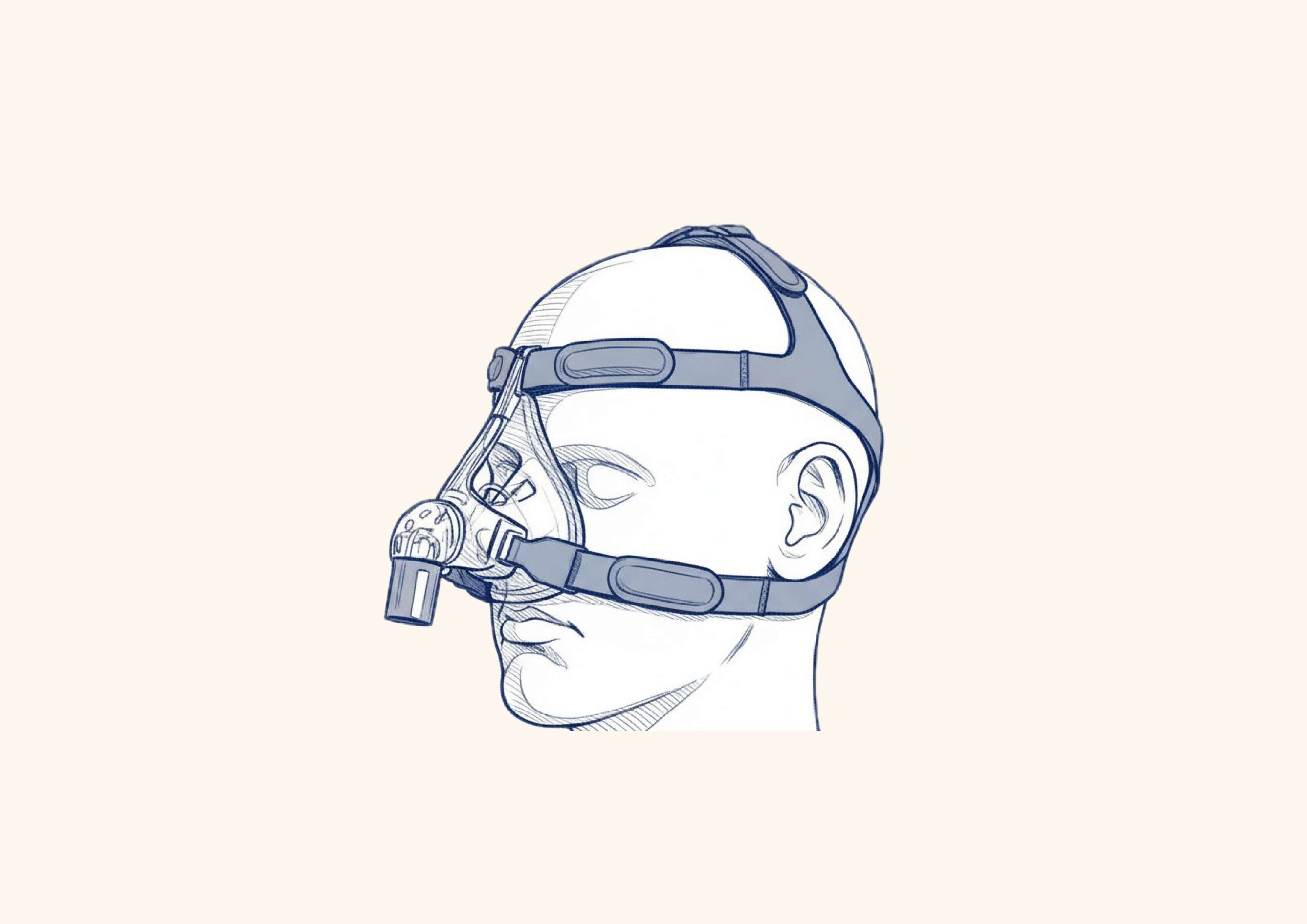
What it looks like & how it works
A soft cushion seals around the nose (not the mouth). Air flows through standard or heated tubing into the nasal cavity to “splint” the airway open.
Best candidates
- Works well across mild to moderate OSA, and even some severe cases when pressures are stable
- Especially good for people who breathe mostly through the nose
- Often the first-line choice for new users
Best for
- Most users at a wide range of pressures
- Side sleepers who move around at night
- People who want a balance of comfort + stability
Why people like it
- Stable seal without covering the mouth
- Works well with higher pressures than nasal pillows for many users
- Easy to pair with a chin strap if your mouth pops open
Cautions
- Mouth opening can cause dry mouth/leaks, often solved with a chin strap
- Glasses are fine for reading, but frame may touch bridge of nose for some
Pro tips
- Fit it while lying in your usual sleep position (“snug, not tight”)
- If you wake with dry mouth, try a chin strap and bump humidification one notch
Nasal pillows
What it looks like & how it works
Two soft “pillows” sit just inside the nostrils. Minimal headgear; super open field of view.

Best candidates
- Often used for mild to moderate OSA
- Not ideal for severe cases with very high pressures
- Best for people who want the lightest, least confining mask
Best for
- Minimalists; readers/glasses wearers
- Beard or mustache (easier seal than larger cushions)
- Lower–moderate pressure needs
Why people like it
- Lightest, least confining option
- Great for side sleeping and watching TV/reading in bed
Cautions
- Direct airflow can feel intense at higher pressures
- Nostril irritation if pillow size/angle is off
Pro tips
- Try one size up (slightly larger pillows often seal more comfortably)
- Use a bit more humidification if your nostrils feel dry
- If high pressure feels “sharp,” consider switching to a nasal mask at the same settings
Full-face (oronasal) masks
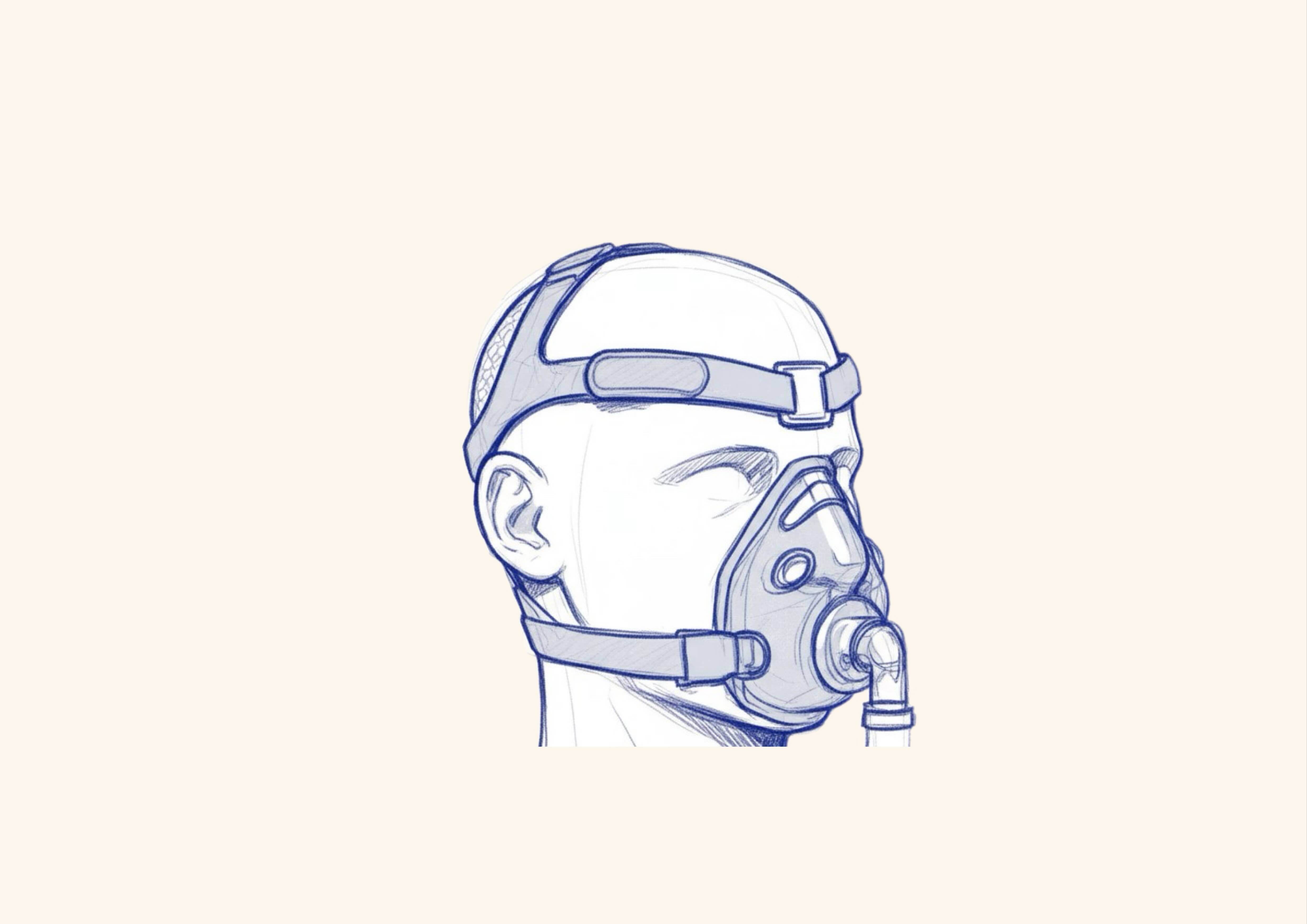
What it looks like & how it works
A cushion seals over both nose and mouth, so therapy continues even if your jaw drops or you’re congested.
Best candidates
- Often required for moderate to severe OSA, especially with high pressure needs
- Essential for mouth breathers or frequent nasal congestion
- Reliable fallback if nasal masks or pillows don’t work
Best for
- Mouth breathers or frequent nasal congestion
- Higher pressure requirements
- Nighttime reflux/GERD with mouth opening
Why people like it
- Reliable when the mouth opens—therapy won’t stop
- Often the steadiest option for severe OSA
Cautions
- Often needs higher therapeutic pressures vs nasal interfaces, and is linked with more leaks and lower adherence in real-world use.
- Bulkier on the face; side-sleepers may need a CPAP pillow cutout
Pro tips
- Fit it lying down; overtightening causes marks and more leaks
- If you see “chipmunk cheeks,” re-seat the lower cushion and relax the bottom straps
- Consider a CPAP pillow or side-cutout pillow to reduce frame pressure
Hybrids (nasal pillows + oral cushion) / Oral masks
What it looks like & how it works
A small mouth cushion plus nasal pillows (hybrid) — or a mouth-only interface (oral). Goal: mouth-breather coverage without the bulk of a full-face frame.

Best candidates
- Best for mild to moderate OSA in mouth breathers who dislike full-face masks
- Not usually recommended as a first-line for severe cases
- Good for users with facial hair or glasses
Best for
- Mouth breathers who dislike full-face masks
- Glasses wearers who want an open line of sight
- Users struggling to seal larger cushions (beard, facial contours)
Why people like it
- Less facial coverage; easier for reading/glasses
- Can seal both airways with a smaller footprint
Cautions
- More contact points = more adjustments to get perfect
- If pillows or oral cushion shift, leaks wake you up
Pro tips
- Start by sizing the oral cushion first, then fine-tune pillow size/angle
- A soft cervical collar can keep the jaw from dropping too far and breaking the seal
- If you consistently need higher pressures and see leaks, trial a full-face to compare
Getting the right mask fit
Normal mask fitting
Most CPAP fittings still rely on guesswork. “A DME technician comes to your home, looks at your face, and guesses what might fit,” says Nicolas Nemeth, co-founder of Dumbo Health. “They’ll say, ‘Your nose looks like this, you have a beard, so this mask should work.’ Some are very experienced, but others are new and not properly trained.”
Even when the mask feels fine at first, comfort often fades once you start using it overnight. Leaks, red marks, or air blowing into your eyes are common. And when that happens, getting it fixed can take weeks. “In most cases, the DME handles the equipment, but only your doctor can approve a change,” Nemeth explains. “Patients end up stuck in the middle, waiting weeks for an appointment while struggling with the wrong mask.”
Without timely help, many people give up. “Most of the time, they just try to make it work,” Nemeth says. “Then at some point, they think, ‘It’s not for me,’ and they quit.”
Mask fitting at Dumbo Health
Dumbo Health removes the guesswork entirely. “We use 3D face-scanning technology that works like Face ID,” says Nemeth. “It maps every detail of your face and compares it against millions of others to predict the best mask fit.”
That algorithm, an AI engine integrated into Dumbo Health’s platform, reaches about 98 percent accuracy. It measures key features like facial width, nasal shape, and contours to recommend the mask most likely to seal comfortably and stay stable during sleep.
“Traditional fittings depend on who happens to fit you that day,” Nemeth explains. “We wanted something objective that delivers the same level of precision for everyone.” The system ranks masks by fit quality and comfort, then cross-checks availability so patients only see options that are actually in stock.
The result is a faster, data-driven process that gets the right mask from the start, one that fits, feels good, and makes CPAP therapy more sustainable over time.
Troubleshooting mask leaks
Practice during the day. As Dr. Harrison Gimbel, a board-certified sleep medicine physician and doctor at Dumbo Health, notes, “Patients who struggle with their CPAP masks at night may benefit from acclimating to it during the daytime by wearing it briefly while watching TV, etc.
Don’t overtighten. Pulling the straps tighter rarely solves leaks — it often creates new ones and leaves marks on your skin.
Check the cushion size. Even being one size off can stop the mask from sealing. Ask your provider about trying another size if leaks persist.
Test in bed. Adjust your mask while lying in your natural sleep position, not sitting up. Roll to the side or shift like you normally would, that’s when leaks show up.
Add comfort features. A dry nose or mouth makes leaks more noticeable. Turn on the humidifier or use heated tubing to keep airflow steady and comfortable.


.png)
.png)